


I found Hipcamp most useful when I wanted the character of a private outdoor stay rather than a standard campsite search. It brings campsites, campgrounds, and RV resorts into one travel app, but its real appeal is the variety behind those labels: a trip can feel more personal, more secluded, or simply different from booking a familiar public campground. My overall view is positive, with one important condition: you need to treat each listing as an individual place, not as a uniform hotel-style product.
That distinction shapes almost everything about the experience. A public campground directory usually helps me locate established sites with predictable facilities, while Hipcamp is better for discovering landowners and smaller outdoor properties that may not appear in the usual travel tools. I would recommend it to campers who enjoy comparing settings and reading the practical details before committing. I would be more cautious about recommending it to anyone who wants guaranteed uniformity, instant certainty about amenities, or a completely frictionless booking process.
What using Hipcamp is really like
A broader way to search for an outdoor stay
Hipcamp is a free Travel & Local app from Hipcamp, Inc., designed around finding and booking private campsites, campgrounds, and RV resorts. In practice, I see it less as a simple map of places to sleep and more as a discovery tool for outdoor trips. The useful question is not only “Where can I camp?” but also “What kind of setting do I want this time?”
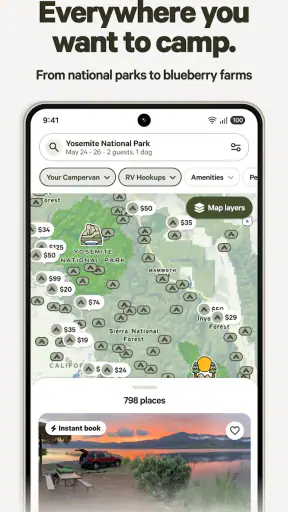
That change in mindset matters. If I search only for a conventional campground, I may overlook a small private property, a quiet rural site, or a location suited to an RV rather than a tent. The app makes those possibilities easier to consider in the same planning session. It is particularly handy when the destination is flexible and I am willing to choose the experience first, then build the route around it.
The app has reached a 4.8 average from around 16 thousand ratings, and its audience is substantial, with over one million installs. Those figures do not remove the need for careful checking, but they do suggest that Hipcamp has become a familiar option for people planning outdoor stays. I also appreciate that it is rated for Everyone, which makes it approachable for households planning trips together, although the actual suitability of a property still depends on the details of that specific listing.
Why the listing details deserve more attention than the map
My strongest advice is to use the map as a starting point, not as the final decision-maker. A pin can show distance and general location, but it cannot tell me whether the access road will suit my vehicle, whether the ground is comfortable for my tent, or whether the atmosphere matches what I have in mind. Those answers come from reading the listing closely and checking the practical information before booking.
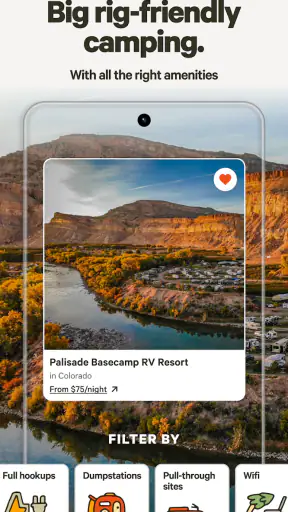
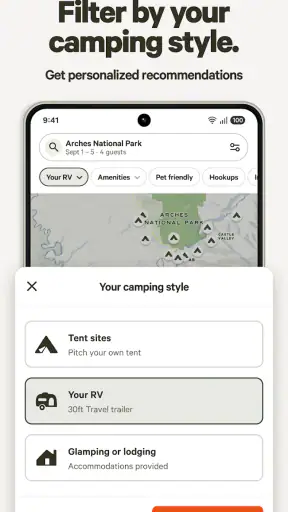
I also look at the difference between a place that merely allows camping and one that is prepared for the kind of trip I am planning. A tent camper, an RV traveler, and someone looking for a cabin-style escape can all use the same app, yet their priorities are completely different. I would not evaluate a site for a small tent in the same way I would evaluate an RV resort. Hipcamp is at its best when I make that distinction early rather than browsing every result as if it offered the same experience.
A useful workflow is to decide my non-negotiables before opening the search: vehicle type, sleeping arrangement, preferred level of privacy, acceptable driving distance, and the facilities I genuinely need. Then I compare the remaining listings on atmosphere and convenience. This prevents an attractive photograph from distracting me from a difficult arrival or a setup that does not fit my equipment.
A realistic weekend planning example
Imagine I want a short weekend away but do not have a fixed destination. I might begin by searching around several areas within a comfortable driving range, then narrow the results to places compatible with my tent. After that, I would read the descriptions for access information, inspect the photos for the shape and condition of the site, and compare the surrounding setting rather than choosing the first inexpensive-looking option.
Before booking, I would write down the questions that could affect the trip: Is the arrival suitable after dark? Is the site close to other guests or relatively private? What happens if rain changes the road conditions? Are there restrictions that affect my equipment or routine? Sending those questions to the host before paying is one of the most valuable habits I can develop with a marketplace like this.
On the day of travel, I would save the important booking information before leaving reliable mobile coverage. I would also avoid assuming that a rural property has the same navigation clarity as a hotel in a town. The app can help me choose the place, but good preparation still means checking the route, fuel needs, arrival timing, and what I must bring myself.
The app’s biggest strength: choice with personality
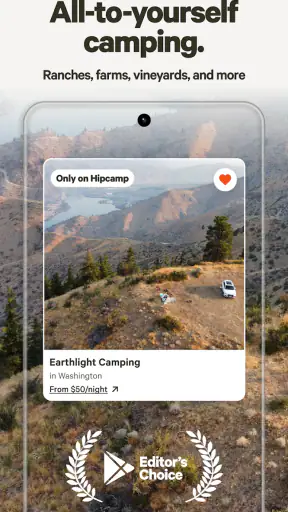
What separates Hipcamp from a basic campground directory is the sense that the destination can be part of the story. A conventional booking service often pushes me toward standardized accommodation categories. Hipcamp encourages a more open-ended search, where the setting, land, and style of stay influence the decision. That is valuable for travelers who are tired of repeating the same type of weekend.
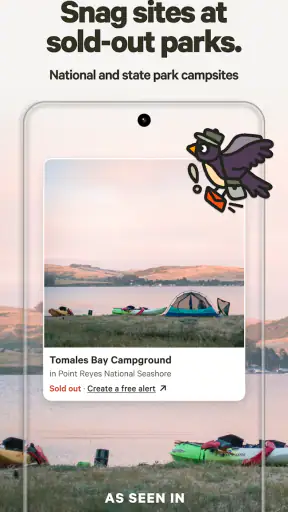
This variety also helps when the obvious options are unavailable. Instead of abandoning a trip because a familiar campground is full, I can explore private alternatives in the same broad area. That does not guarantee a perfect substitute, but it gives me another path to investigate. For spontaneous planners, this can be more useful than a narrow list of officially managed sites.
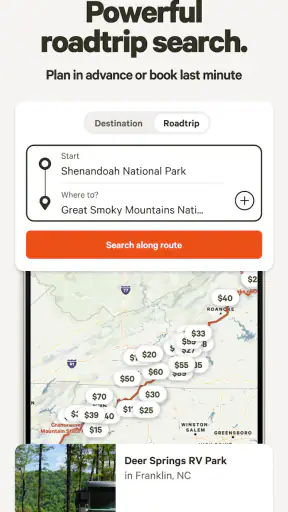
I find the app especially appealing for people who like to travel around an activity. A hiking weekend, a scenic drive, a quiet writing retreat, or an RV stop can each lead to a different kind of search. The accommodation is not always the destination, but Hipcamp makes it easier to find a place that supports the reason I am traveling.
Where the experience needs patience
The same variety that makes the app interesting also creates its main weakness: consistency is not automatic. A private campsite may have a very different standard of access, privacy, terrain, and facilities from another listing that looks similar in search results. I need to do more interpretation than I would with a standardized hotel room or a familiar public campground.
Photos can be helpful but selective. A wide landscape image may show the setting without making the actual sleeping area clear. A site can look peaceful while still being close to a road, neighboring guests, livestock, or a shared facility. I do not see that as a flaw unique to Hipcamp; it is a normal risk of booking distinctive private spaces. Still, it means the app rewards careful reading and direct questions more than quick, impulse reservations.
There can also be a mental cost to comparing many unusual options. When every property has its own wording and character, I may spend longer deciding than I would on a conventional booking platform. That is worthwhile for a special trip, but less appealing when I simply need a dependable overnight stop. For a late arrival, a tight itinerary, or a trip where predictable services matter most, a standard hotel or established campground may be the better tool.
How I would compare it with familiar alternatives
Compared with a public campground website, Hipcamp feels more exploratory. A government or park-operated reservation system may be preferable when I already know the park, need official information, or want the established rules and infrastructure of a managed campground. Hipcamp becomes more useful when I am open to private land and want to see alternatives beyond the usual public inventory.
Compared with a broad accommodation marketplace, Hipcamp is more focused on outdoor stays. A general travel app may offer more hotels and conventional rooms, but it can make camping feel like an afterthought. Hipcamp keeps the search centered on tents, RVs, campgrounds, and cabins, so I spend less time filtering out options that do not fit the trip.
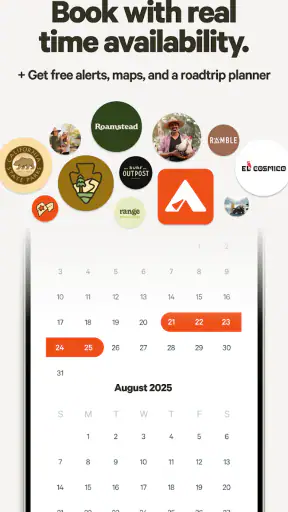
Compared with searching through maps and contacting properties individually, Hipcamp is more organized. I can browse possibilities in one place instead of collecting scattered names, phone numbers, and notes. The trade-off is that I still need the judgment I would use when contacting a property directly. The app streamlines discovery and booking, but it does not replace common sense about outdoor conditions.
Small planning techniques that make a big difference
One technique I found valuable is to separate “beautiful” from “practical” during the first pass. I shortlist places based on the setting, then perform a second check focused only on arrival, sleeping arrangement, facilities, privacy, and vehicle suitability. This two-stage approach reduces the chance that an appealing image will make me overlook an important inconvenience.
Another is to plan for the least comfortable realistic condition, not the ideal one. If I am visiting during uncertain weather, I want to know how the site works when the ground is wet and the drive takes longer. If I am bringing an RV, I need to think about maneuvering and arrival rather than just the view. A listing that is perfect in sunshine may not be the right choice for my actual trip.
I also recommend keeping a short personal checklist for every reservation. I note the exact sleeping setup, what I must pack, the expected arrival process, and any questions still waiting for an answer. This is more useful than relying on memory, especially when I compare several properties with different arrangements. It turns browsing into a practical decision instead of a collection of attractive possibilities.
Who will enjoy it most
Hipcamp is a strong fit for curious campers who want more choice than a standard campground directory provides. It suits people who enjoy discovering less conventional places, families comparing different styles of outdoor stay, and RV travelers who want to investigate resorts as well as simpler sites. It can also work well for experienced campers who already know which details matter to them.
I would recommend it to someone planning a flexible weekend, especially if the destination can change according to availability and atmosphere. It is also useful for people who want to combine a familiar activity with a new overnight setting. The app encourages that kind of trip because it presents the stay as something to explore rather than merely a bed near an attraction.
I would not make it my first recommendation for a traveler who dislikes uncertainty, needs a highly standardized facility, or has no time to inspect listing details. It may also be a poor fit for someone who expects every site to offer the same services or who wants a booking decision based almost entirely on a star rating. Here, the individual property matters more than the app’s overall reputation.
Version, cost, and everyday accessibility
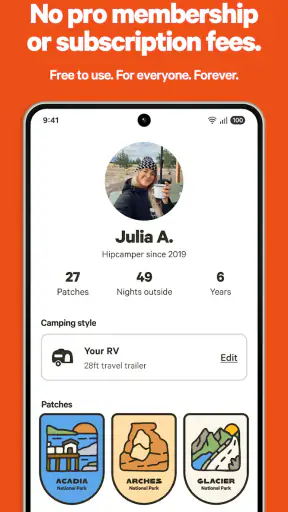
The app is free to download and use, which makes it easy to explore before deciding whether it belongs in my travel routine. Its current version is 4.19.0, and it supports Android 7.0 or later. Those requirements are modest enough for many older Android devices, so I would not expect the app itself to demand a recent phone simply for basic access.
That said, the real cost of using a travel marketplace is not only the app download. The stay itself, any booking-related charges shown during the reservation process, travel, equipment, and possible changes to the plan all affect the final budget. I would always review the complete booking breakdown and the property’s terms before confirming, rather than treating a free app as evidence that the trip will be inexpensive.
My final recommendation
After using Hipcamp as a planning companion, I see its central strength clearly: it opens the door to outdoor stays that are easy to miss when I search only through public campground systems or general hotel apps. The experience feels more personal and more varied, but that benefit comes with responsibility. I have to read carefully, ask sensible questions, and choose according to the actual trip rather than the most attractive photograph.
My verdict is simple: choose Hipcamp when discovery and variety matter more than perfect standardization. It is a particularly good companion for flexible campers, RV travelers, and anyone who wants a more distinctive night outdoors. If I need a predictable room, a tightly managed campground, or a fast reservation with little research, I would use a more conventional alternative. For everyone else, this free Travel & Local app is worth keeping available when the usual camping search feels too narrow.
In the end, I would recommend Hipcamp to a friend with one sentence of advice: use it to find the right kind of place, then slow down and verify that the specific property is right for you. That balance captures both what makes the app valuable and what keeps it from being a completely effortless booking tool.


